- Today was one of the most interesting and meaningful days of the trip. Today, we took a 15-minute bus ride to the Olympic ruins of Olympia. Which houses some of the oldest ruins that give us an idea of what the Ancient Olympic Games used to look like. Filled with temples of different gods as well as training centers for the athletes, this area of Olympia used to be the center of the ancient Olympic Games. People from all the different city-states in Greece as well as some outsiders from other countries came to compete in the other games that the Greeks put on. If you were victorious in the games you would receive a headband made out of olive branches from the original Athena's olive tree which was seen as a great honor to many Greeks during that time. They would also name the years after you to help keep track of time. For example, if I had won the ancient Olympics three years in a row the years would have been named Josh 1, 2, and 3. Everything about this trip to Olympia was very eye-opening as I did not know much about the ancient Olympic Games until then. To try and channel our own Ancient Olympic spirit we took to the same race track the ancient Olympians used to try and see who would win the games. I did not take part in the run as I did not want to hurt myself but my friends had a great time battling it out. I also learned about the sexism that took place during the games as women were not able to watch the games and if they were caught they were sentenced to death. Because of this rule, women did not take much interest in the Olympics as they wanted to preserve their lives so the cities of Greece created something called the Hera games, which was a similar type of games to the Olympics but with fewer games and an emphasis on more feminine sports. Even though there were some women who stayed far away from the Olympics there were some who resisted and actually ended up winning the Ancient Olympic Games. This entire trip to the Ancient Olympic ruins was very interesting and enlightening to me on how the Olympics we know and love today got to where it is today. It was not always perfect and did not have the same values as we do today but everything has to start somewhere. After our long and academic trip to the ancient Olympic ruins, we traveled to the center of town and had a great Greek lunch filled with classic Greek dishes such as gyros.
Wednesday, May 28, 2025
5/28: Olympic Ruins Exploration
5/28 Olympia Ruins and Museums
Today was our full day in Greece and our only day in Olympia. We started our day with a light breakfast from the hotel we were staying at and then headed to our first site. We began at the archaeological sites of Olympia. The archaeological site of Olympia, located in the western Peloponnese region of Greece, is one of the most significant sanctuaries of ancient Greece and the original location of the Olympic Games. It also contributed as a religious center for Zeus, the king of all Greek Gods. There were many remains of old temples and structures. At one point, there was a Temple of Zeus that was once named one of the seven wonders of the world. This place was a common ground between all ancient Greek cities, where they got to compete in the form of Olympic games. We viewed sites like the race track where Greeks used to run under a large stadium. We raced on the track just like the athletes would have centuries ago. We also saw the remains of what used to be a gymnasium where athletes would practice for the games and perform some events. This structure was half of what it used to be, unfortunately. We saw the old bathrooms, the echo stoa, the palaestra, and the temple of Zeus. Fun fact is that the OCOG used to be located in one of the ruins as well. There was not much left of these places, but seeing the remains was pretty cool. It, unfortunately, fell to ruins by the Roman Empire but was revisited and brought back to life in the 1800s when the Olympics were re-created.

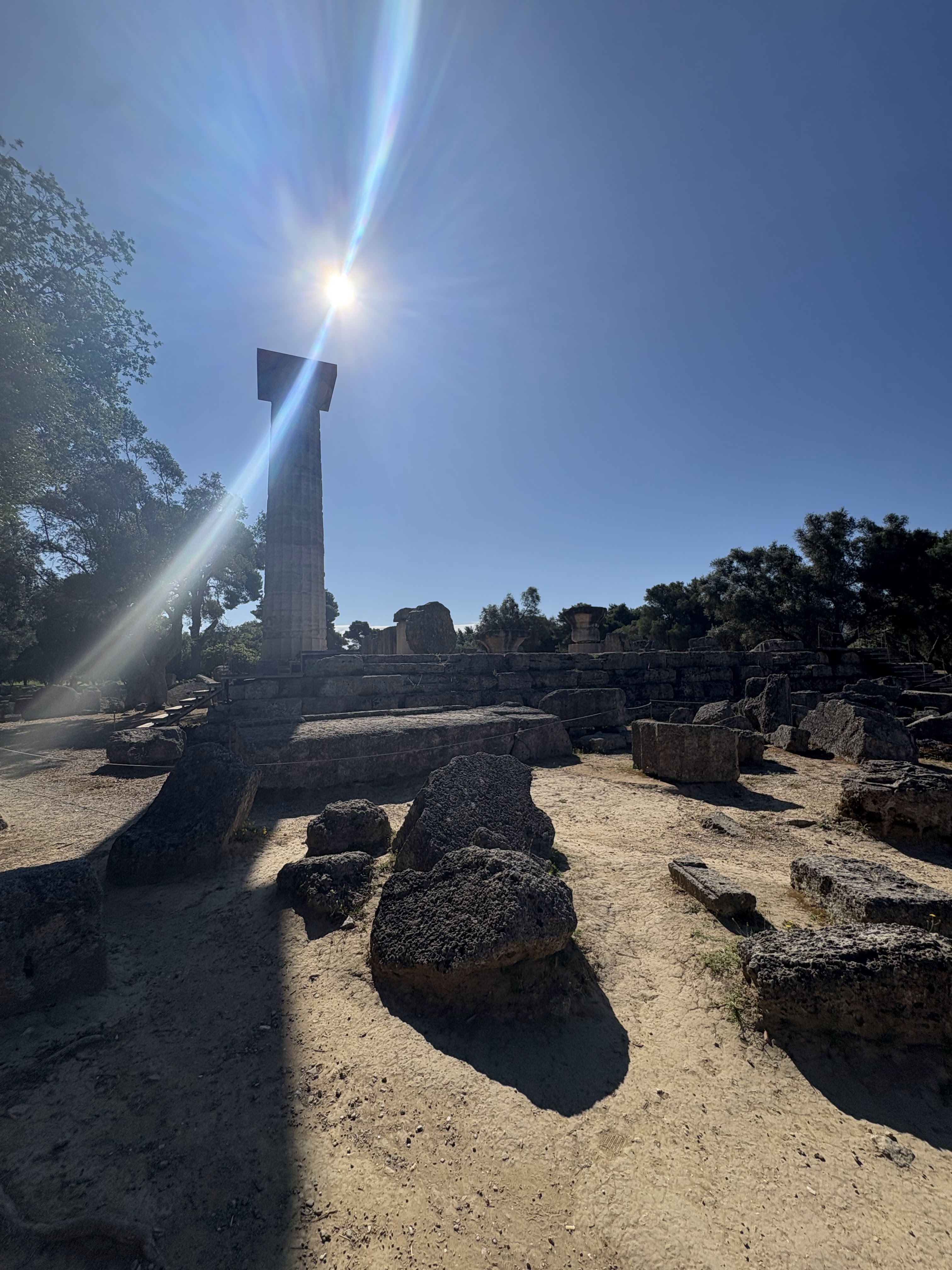

After viewing some of these sites, we took a walk to some of the museums linked with the archeological sites. In these museums, we got some history about some of the objects used in the games. We saw statues that used to be in the temples and learned the significance behind the different eras and sides of the games. Some important statues included that of Zeus, Hera, and Hermes as they all had very important roles in the ancient Olympic games. We also saw a layout of what Olympia used to look like, and every structure that we had previously mentioned we got to see in full. There were also important gear like weapons and helmets that showed the lifestyle of the athletes and Greek people. My favorite statue was the disc thrower, as we talked about this statue on the trip and it was the first one I had seen.

After the museums, we went to get some food and shop in the local shops. We got some authentic Greek food which was amazing, and we all got some gifts from the stores. After, we met back up with our bus driver and departed for the long and awaited trip to Athens for the remainder of the trip. We ended with some late dinner and had a full day of fun for our first day in Athens tomorrow!
Monday, May 26, 2025
5/27 - Travel Day!
Today was all about travel. We were downstairs by 7:15 to catch our train to the Geneva Airport, and it was clear that most of us weren't fully awake. Basically everyone slept on the train, trying to get a little more sleep before the rest of our day. Once we arrived at the airport, we checked our bags pretty easily and got through security with plenty of time to spare. There was some confusion about our gate, as there were two flights at 11:30 going to Athens and they switched our gate, but we found our plane and boarded right on time. The flight was quick, but the views were amazing. There were very few clouds in the sky, meaning we could see what we were flying over the whole time. In the beginning, we got some incredible views of the Swiss Alps, and it was one of the most beautiful things I've ever seen. As we got closer to Athens, we had some amazing views of the different islands that make up the country. The air was so clear, and the Mediterranean was even clearer, which made the views all that more impressive.


Once we landed, we met with our travel guides, who brought us to the bus. We had a whole coach bus to ourselves, meaning we had plenty of space to lay out. We then departed from the airport to our first destination, Olympia. The home of the ancient Olympics was about a four-hour drive from Athens, so I got some work done on the outline we had to complete for our research paper. My paper focuses on sportswashing, a term that describes countries attempting to cover up their faults by manipulating public perception through sports. The issues these countries are dealing with harm their image and impede their interests, so they invest in sports to distract audiences from their faults. Some historical examples of sportswashing taking place are the 1934 World Cup (hosted by Fascist Italy) and the 1936 Olympics (hosted by Nazi Germany). Both these countries tried to confuse audiences by manipulating information to make themselves look better than they were. Recently, Qatar, Saudi Arabia, and China have all been suspected of sportswashing to cover up various human rights issues, which I plan to explore heavily in my paper.

I completed most of my outline before we reached our first stop, the Corinth Canal. Built in the 1890s, the canal cuts through the Isthmus (a word I didn't know existed before today) of Corinth and connects the Peloponnese Peninsula with mainland Greece.

After this, we drove a bit more before stopping at a restaurant. I cannot tell you what the place was called (because it was super Greek, and I have no clue), but the food was super tasty and very filling. It was very traditional Greek cuisine, with chicken skewers and pork platters, and it was all so amazing. After dinner, most people fell asleep for the final part of the bus ride before we finally arrived at our hotel in Olympia. It was a long and exhausting travel day, but the views were incredible, the food fantastic, and the sites will be well worth it tomorrow. I can't wait to see what Olympia has in store!

May 26 - World Aquatics, CAS, & IOC!!!!
Another business casual day started off hectic as our fearless leader Dr. Kim gave us the wrong wakeup time the night before and then at 6am in the morning she texted us saying we needed to be ready an hour earlier than what we were told! Somehow it was the one day we were all on time shockingly, but some of us did have to scarf down our breakfast to make it out on time. We took a long uphill walk to World Aquatics which is in this beautiful house which I thought was pretty cool. We had a discussion with Executive Director Brent Nowicki, Sport Director Pere Miro, and Senior Manager of Digital Content and Events Luca Fasani. We discussed various things such as the difference between sports in America and Europe, the workings of World Aquatics, and their upcoming championships in North America in a few months. Nowicki was also an upstate native which was fun to make that connection to all of us since he is from Buffalo, New York.


Our meeting with World Aquatics did run over from what we expected so we were running late to our next meeting with the Court of Arbitration for Sport (CAS) which was a far walk away. So, we hopped in some Ubers to make it to our next presentation. We arrived at CAS where we were greeted by William Sternheimer who is the Manager of Training and Education for CAS. He gave us a presentation on the history of CAS where he dived deeper into the beginning of why the sporting world needed CAS to determine rulings on sport related violations. We also learned about some of the most notable cases which varied in topics and learned about the two different types of cases which can be filed. After our presentation he showed us what a hearing room looked like which is basically a meeting room with many TVs so everyone can see if you’re online. Then he took us to a terrace which had a beautiful view of the city, Lake Geneva and the Alps.

Because we were running late in our meetings lunch was a very quick stop at the Coop store for grab and go lunch to eat on the run. For how cheap the food is it's pretty good quality coming from a grocery store as I had a pesto pasta salad and a spicy salmon onigiri. We hopped on the subway and ate our lunch before walking over near the Olympic Museum for our final stop of the day at the Olympic Study Center. We had 3 people speak to us in total about different sectors of the International Olympic Committee. We first spoke to Sinead Dowling on the Olympic Solidarity group which handles primarily the upholding of the Olympic Values and fund allocations for National Olympic Committees. Then Jocelin Sebastiani spoke to us about the processes of the Olympics regarding more event management and the host cities, while also touching on previous points on Olympic Solidarity. And then Diego Girod spoke to us about the archives and books that we have access to in the Olympic Study Center. He showed us some old artifacts from the first Paris Olympics and the smallest book in the Olympic collection.


Afterwards we accidentally left Luke and Rory at the subway station because they were too slow getting on the train. We went back to the hotel where we rested for a bit and then walked down to the beach to swim in Lake Geneva. The lake was pretty cold but we were able to have fun in the water and refresh ourselves. I then decided to do a solo dinner where I had a warm bowl of ramen after swimming in the cold lake before packing up my room for us to head to Greece!
Sunday, May 25, 2025
Better Late than Never! May 26th: World Aquatics, CAS, & IOC
Today was the most information-dense day we've had on the trip. We had the opportunity to speak with three different organizations across five different meetings. Our day started by meeting with World Aquatics, the federation in charge of a variety of aquatic sports. They helped provide us a lot of context about the European mentality of sport and how it differs from the United States, in terms of the importance of entertainment versus the purity of the sport. Their insight was very unique, and helped shift my perspective on what is important for federations and sport organizations to focus on.
We then headed to the Court of Arbitration of Sport, learning about how they make critical decisions that impact the landscape of the sport world. I'd heard of CAS before, but I loved learning about their decision making process for different types of cases. The legal side of sports isn't something I know much about, so understanding how it operates and how these decisions are made was super cool for me.
Sunday May 25th 2025-A mix of exploring and learning
Today was one of those days that reminded me why this trip is so special—filled with inspiration, good food, and even better company. We’re now in Lausanne, Switzerland, and this beautiful lakeside city has such a peaceful energy, even with a packed itinerary. The highlight of the day was hands down our visit to the Olympic Museum, which completely blew me away.
Walking through the museum was like stepping into the heart of Olympic history. From ancient origins to modern-day events, it was all beautifully curated and immersive. But my favorite part by far was the exhibit on Opening Ceremony costumes. I was absolutely mesmerized by how the outfits reflected the culture, creativity, and symbolism of each nation.
One of the displays that stopped me in my tracks was a pair of Christian Louboutin sandals that had been worn by Cuban athletes during the 2016 Rio Opening Ceremony. Seeing a designer piece like that used in a sporting context was such a cool crossover—it felt like my two worlds of fashion and sports collided in the best way. I couldn’t get over the detail and boldness of the design. It was such a powerful reminder that fashion isn’t just about looks—it’s about identity, performance, and pride.
After we wrapped up at the museum (and took a million photos in front of the Olympic rings, of course), we headed over to a local grocery store to prep for a group picnic. Honestly, the process of shopping together was part of the fun. We picked up a random but perfect assortment of food—hot dogs, buns, corn, chips, cheese, and some sweet snacks for later. Everyone grabbed a few items and helped carry bags down to our picnic spot, which overlooked the lake and mountains.
We spent the afternoon grilling and relaxing. The hot dogs were simple but hit the spot, and the corn turned out surprisingly great on the grill. It felt so wholesome to just sit in a circle on the grass, listening to music, laughing, and enjoying the view. After several busy days of running around cities and sightseeing, the slower pace was really refreshing.
Once we finished up, we took a walk back home, still buzzing from the good vibes. The weather was perfect—just warm enough with a soft breeze. The whole day felt like summer in the best way.
Later that evening, a group of us grabbed dinner at Holy Cow, a local burger place not far from our hotel. I had heard great things about it, and it definitely lived up to the hype.
Switzerland is already proving to be such a hidden gem on this journey. I feel so lucky to experience these small but meaningful moments—and I already know today will be one I look back on with a full heart.


5/25 - Olympic Museum/Lake Geneva Picnic
Sunday in Lausanne was a much-needed restful day. After a day of hiking and sightseeing, and a busy day of meetings and presentations on Friday, we visited the Olympic Museum and had a picnic by Lake Geneva. In the museum, exhibits highlighted the rich history of the Olympics, encompassing both the modern and ancient games. The first part of the museum detailed the rich history of the ancient Olympic Games, held annually in Olympia, Greece. The Ancient Olympic Games were held 293 times from 776 BC to 393 BC. These games were referred to as Panhellenic games, as "pan" means "all," indicating that they were held for all of Greece. In the 1890s, the Modern Olympics were created by Pierre de Coubertin, a French aristocrat. This was the next exhibit featured in the museum. The first Modern Olympic Games were held in Athens in 1896, but the idea of the games was conceived much earlier.
In 1888, Coubertin created a committee dedicated to reviving the Olympic Games. Coubertin was a firm believer in the idea that sport can be a driver for world peace; he organized these worldwide games to promote the positive impacts that sport can have, such as promoting peace, education, and physical fitness. Coubertin also created the motto of the Olympics, “Citius, Altius, Fortius,” which translates to “Faster, Higher, Stronger” in English. After showcasing where the Olympics started, the Museum then highlighted how far the Olympics have gone. The games did not begin as the global spectacle we see every two years. The museum displays the torch from every Olympics, allowing you to see the journey of each one. For example, you watch a video of the 2014 Sochi torch traveling all over the country as it took an unprecedented journey into outer space. The goal of the torch is to spread the Olympic movement and showcase the unique message the upcoming Olympic games will promote. I loved our experience at the Olympic Museum. I am a huge fan of sports history, and in my opinion, there is no better place to see the rich history of sport than at the Olympic Museum. You can see the significant impact of the games on the world, and so they have evolved into one of the largest events globally. There is so much that goes into the Olympics, and the rules are no exception.
After exploring the museum, we discussed Olympic Rule 40, Olympic Solidarity, and doping regulations, which have all generated controversy over the years. Rule 40 discusses player sponsorship regulations, stating that athletes are not allowed to showcase non-Olympic partner sponsorships during the games. In the United States, we are accustomed to seeing sponsorship thrust into our faces by players, but this rule prevents that; it prevents over-commercialization and showcases the games for what they truly are. These rules are tied to the Olympic Solidarity movement. Olympic Solidarity ensures that all 206 National Olympic Committees receive the necessary funds and programming. There have been disagreements in the past about whether these rules should remain in place, primarily due to larger NOCs, which have the most to gain from sponsorships. Smaller NOCs require these rules and programs to remain in place and operate effectively.
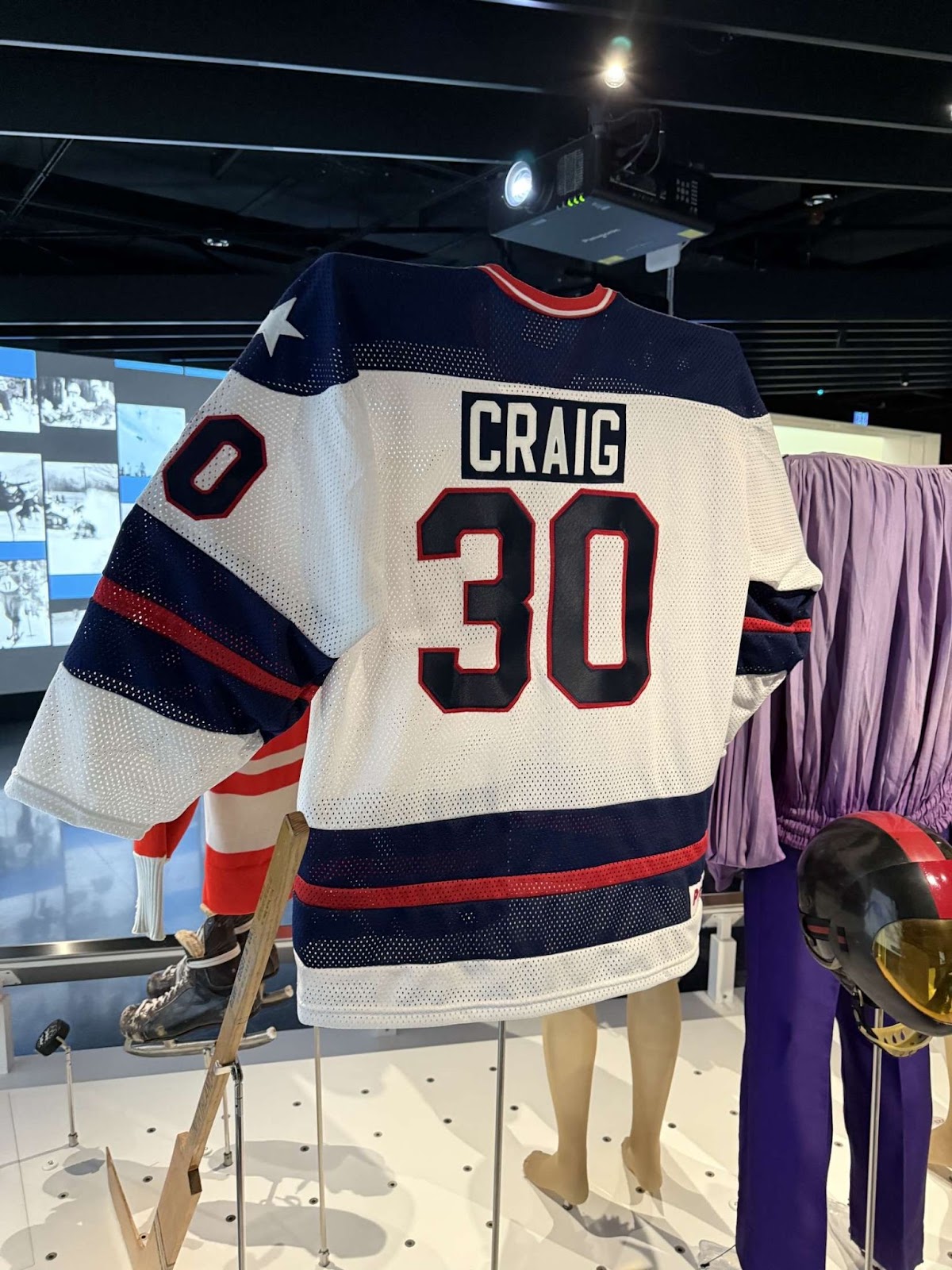
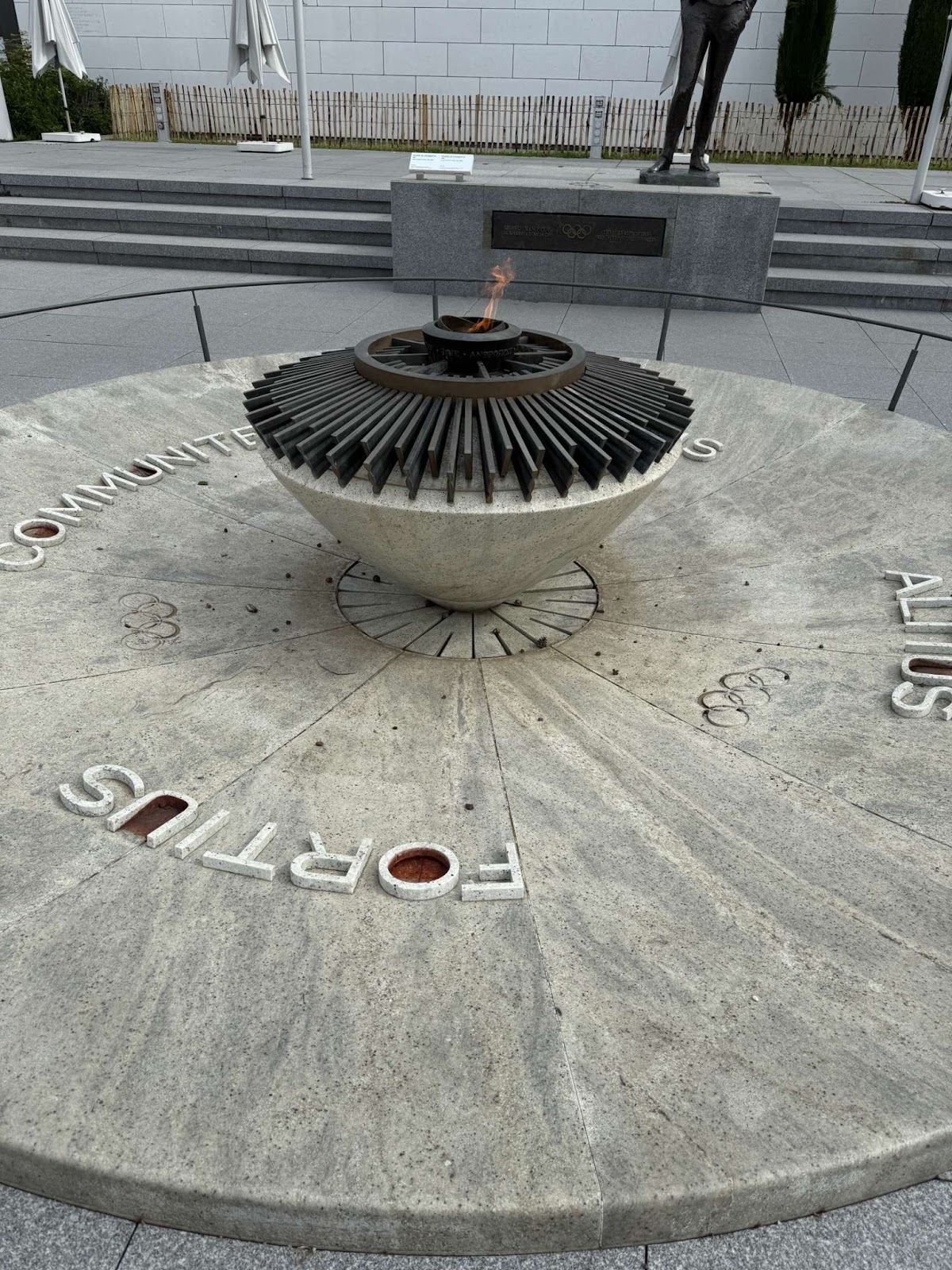
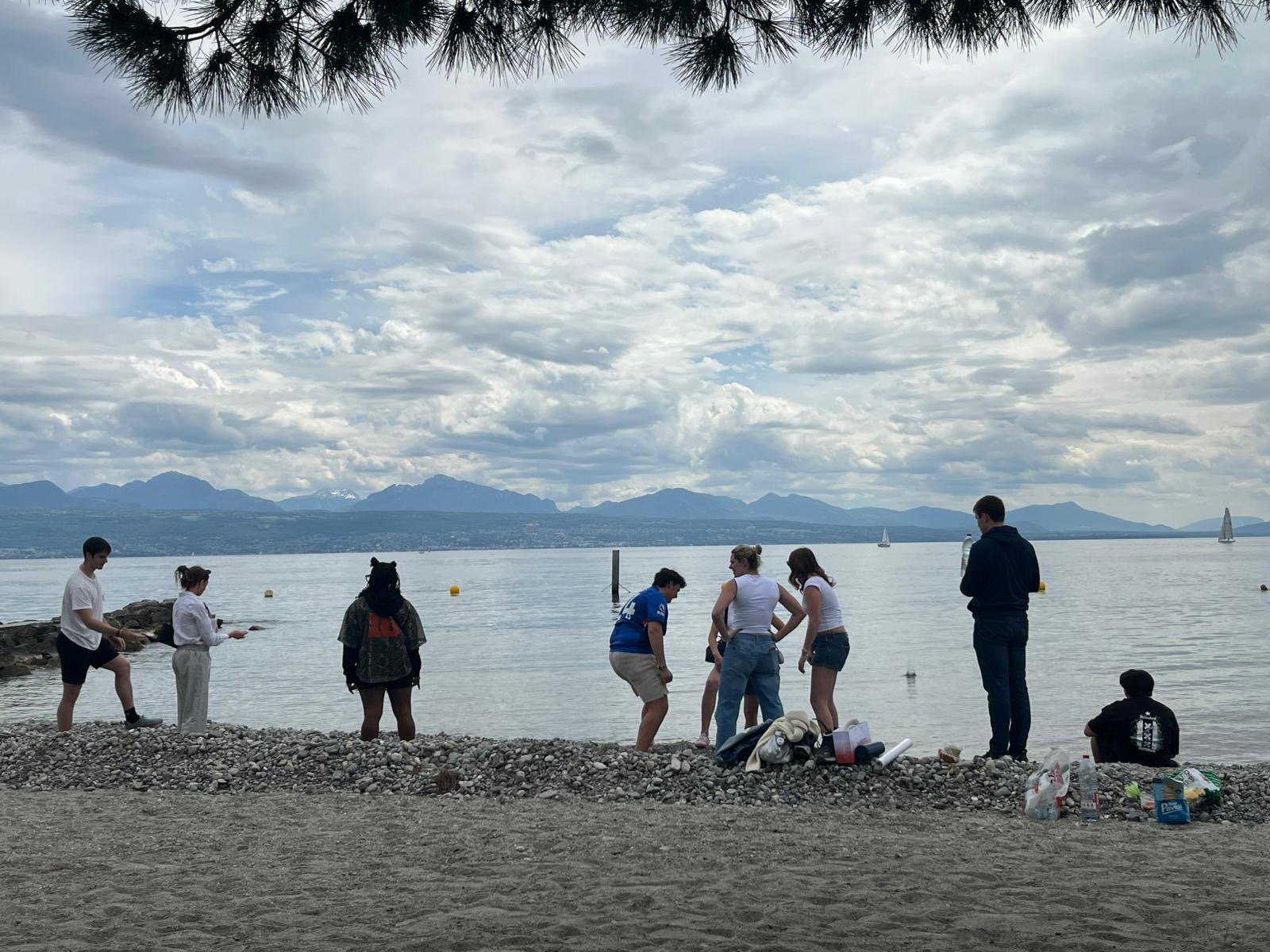
We then took a trip to Lake Geneva to have a picnic, with cooking supplies we bought at a nearby supermarket. The group enjoyed hot dogs prepared by Heavenly and sat by the lake, and relaxed. It was one of the best moments of the trip.
Subscribe to:
Posts (Atom)