Sunday, May 25, 2025

Better Late than Never! May 26th: World Aquatics, CAS, & IOC

 Today was the most information-dense day we've had on the trip. We had the opportunity to speak with three different organizations across five different meetings. Our day started by meeting with World Aquatics, the federation in charge of a variety of aquatic sports. They helped provide us a lot of context about the European mentality of sport and how it differs from the United States, in terms of the importance of entertainment versus the purity of the sport. Their insight was very unique, and helped shift my perspective on what is important for federations and sport organizations to focus on.

We then headed to the Court of Arbitration of Sport, learning about how they make critical decisions that impact the landscape of the sport world. I'd heard of CAS before, but I loved learning about their decision making process for different types of cases. The legal side of sports isn't something I know much about, so understanding how it operates and how these decisions are made was super cool for me.


Sunday May 25th 2025-A mix of exploring and learning

 Today was one of those days that reminded me why this trip is so special—filled with inspiration, good food, and even better company. We’re now in Lausanne, Switzerland, and this beautiful lakeside city has such a peaceful energy, even with a packed itinerary. The highlight of the day was hands down our visit to the Olympic Museum, which completely blew me away.

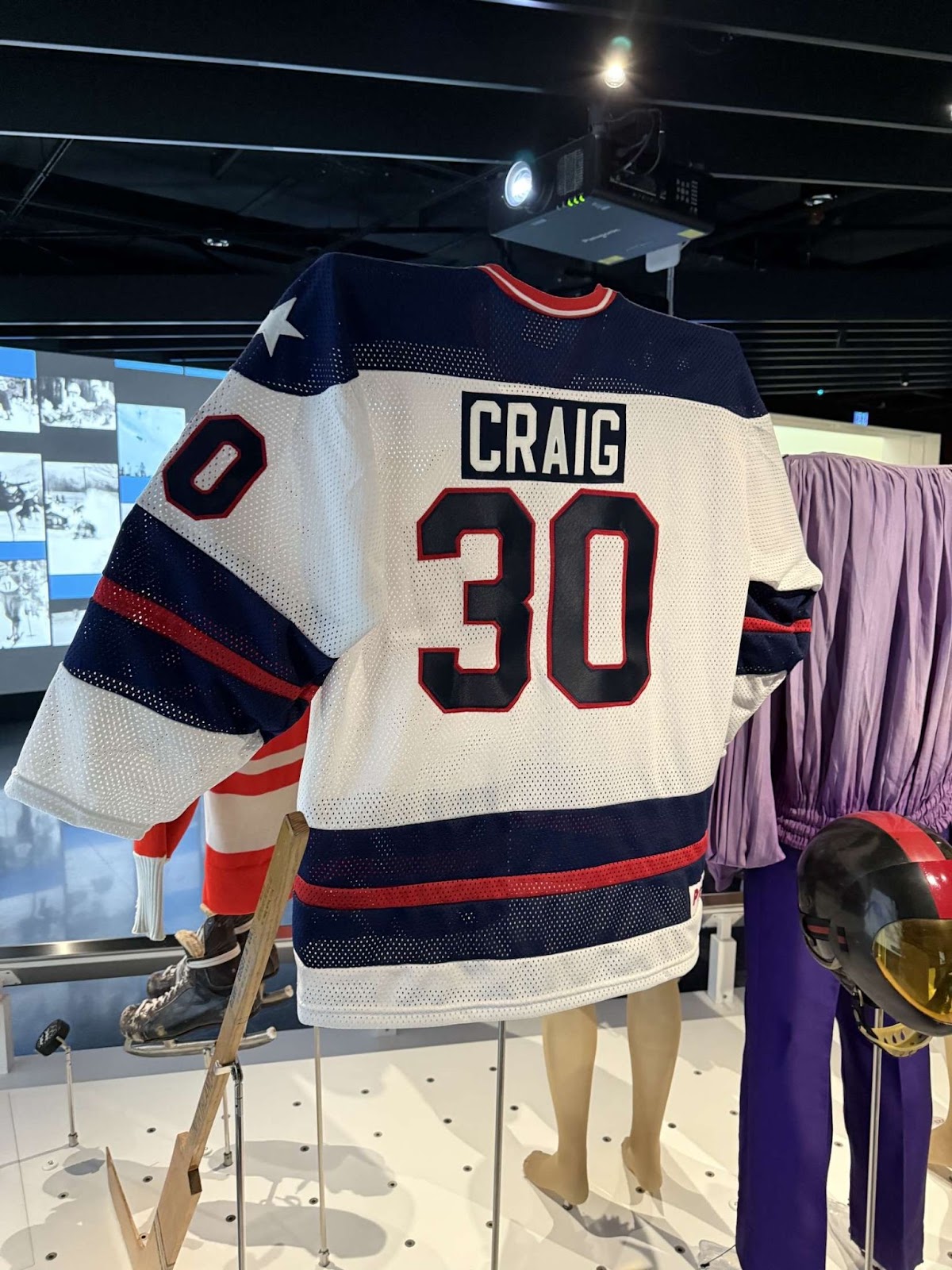
Walking through the museum was like stepping into the heart of Olympic history. From ancient origins to modern-day events, it was all beautifully curated and immersive. But my favorite part by far was the exhibit on Opening Ceremony costumes. I was absolutely mesmerized by how the outfits reflected the culture, creativity, and symbolism of each nation.

One of the displays that stopped me in my tracks was a pair of Christian Louboutin sandals that had been worn by Cuban athletes during the 2016 Rio Opening Ceremony. Seeing a designer piece like that used in a sporting context was such a cool crossover—it felt like my two worlds of fashion and sports collided in the best way. I couldn’t get over the detail and boldness of the design. It was such a powerful reminder that fashion isn’t just about looks—it’s about identity, performance, and pride.

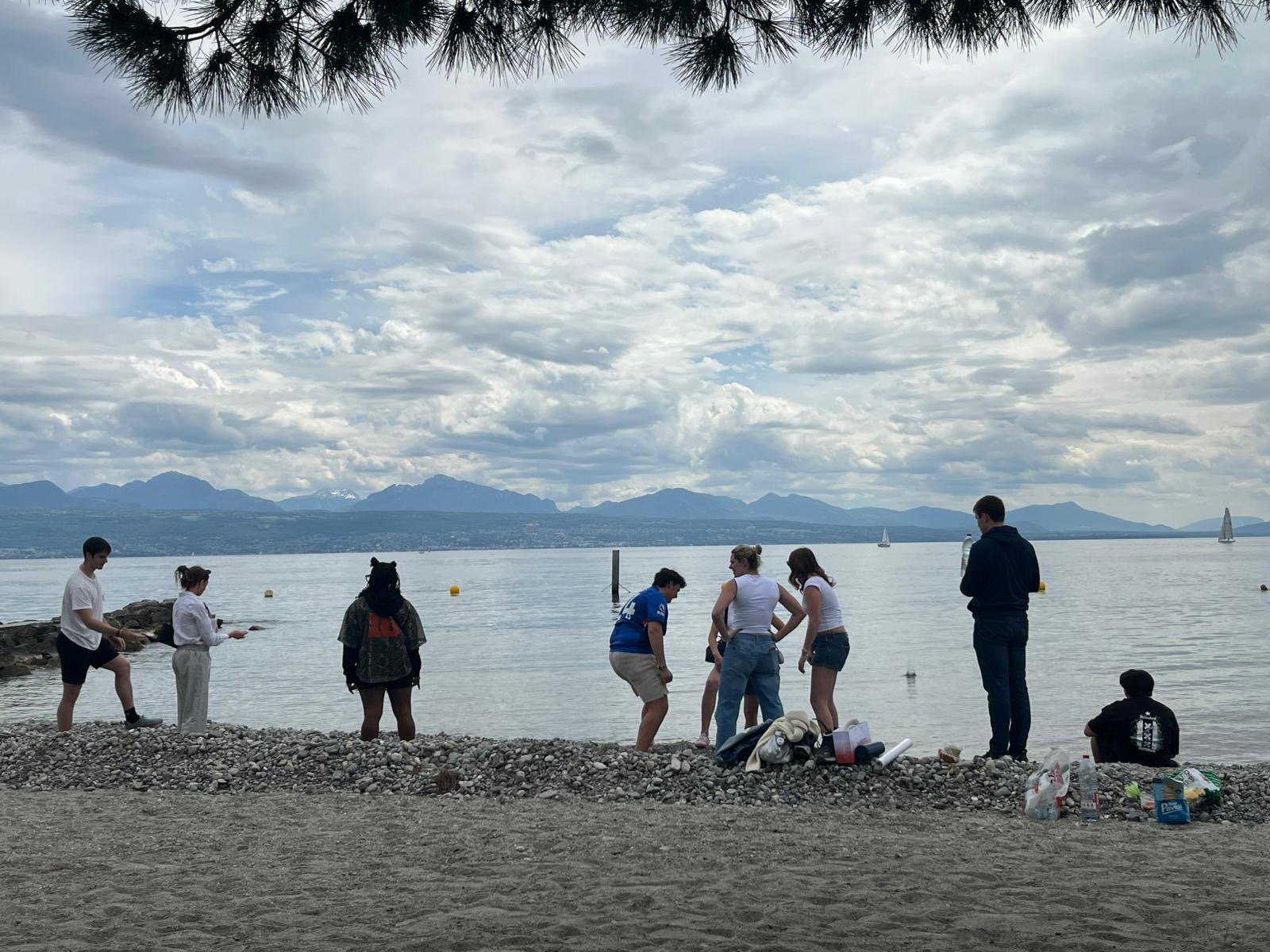
After we wrapped up at the museum (and took a million photos in front of the Olympic rings, of course), we headed over to a local grocery store to prep for a group picnic. Honestly, the process of shopping together was part of the fun. We picked up a random but perfect assortment of food—hot dogs, buns, corn, chips, cheese, and some sweet snacks for later. Everyone grabbed a few items and helped carry bags down to our picnic spot, which overlooked the lake and mountains.

We spent the afternoon grilling and relaxing. The hot dogs were simple but hit the spot, and the corn turned out surprisingly great on the grill. It felt so wholesome to just sit in a circle on the grass, listening to music, laughing, and enjoying the view. After several busy days of running around cities and sightseeing, the slower pace was really refreshing.

Once we finished up, we took a walk back home, still buzzing from the good vibes. The weather was perfect—just warm enough with a soft breeze. The whole day felt like summer in the best way.

Later that evening, a group of us grabbed dinner at Holy Cow, a local burger place not far from our hotel. I had heard great things about it, and it definitely lived up to the hype.

Switzerland is already proving to be such a hidden gem on this journey. I feel so lucky to experience these small but meaningful moments—and I already know today will be one I look back on with a full heart.


5/25 - Olympic Museum/Lake Geneva Picnic

Sunday in Lausanne was a much-needed restful day. After a day of hiking and sightseeing, and a busy day of meetings and presentations on Friday, we visited the Olympic Museum and had a picnic by Lake Geneva. In the museum, exhibits highlighted the rich history of the Olympics, encompassing both the modern and ancient games. The first part of the museum detailed the rich history of the ancient Olympic Games, held annually in Olympia, Greece. The Ancient Olympic Games were held 293 times from 776 BC to 393 BC. These games were referred to as Panhellenic games, as "pan" means "all," indicating that they were held for all of Greece. In the 1890s, the Modern Olympics were created by Pierre de Coubertin, a French aristocrat. This was the next exhibit featured in the museum. The first Modern Olympic Games were held in Athens in 1896, but the idea of the games was conceived much earlier.

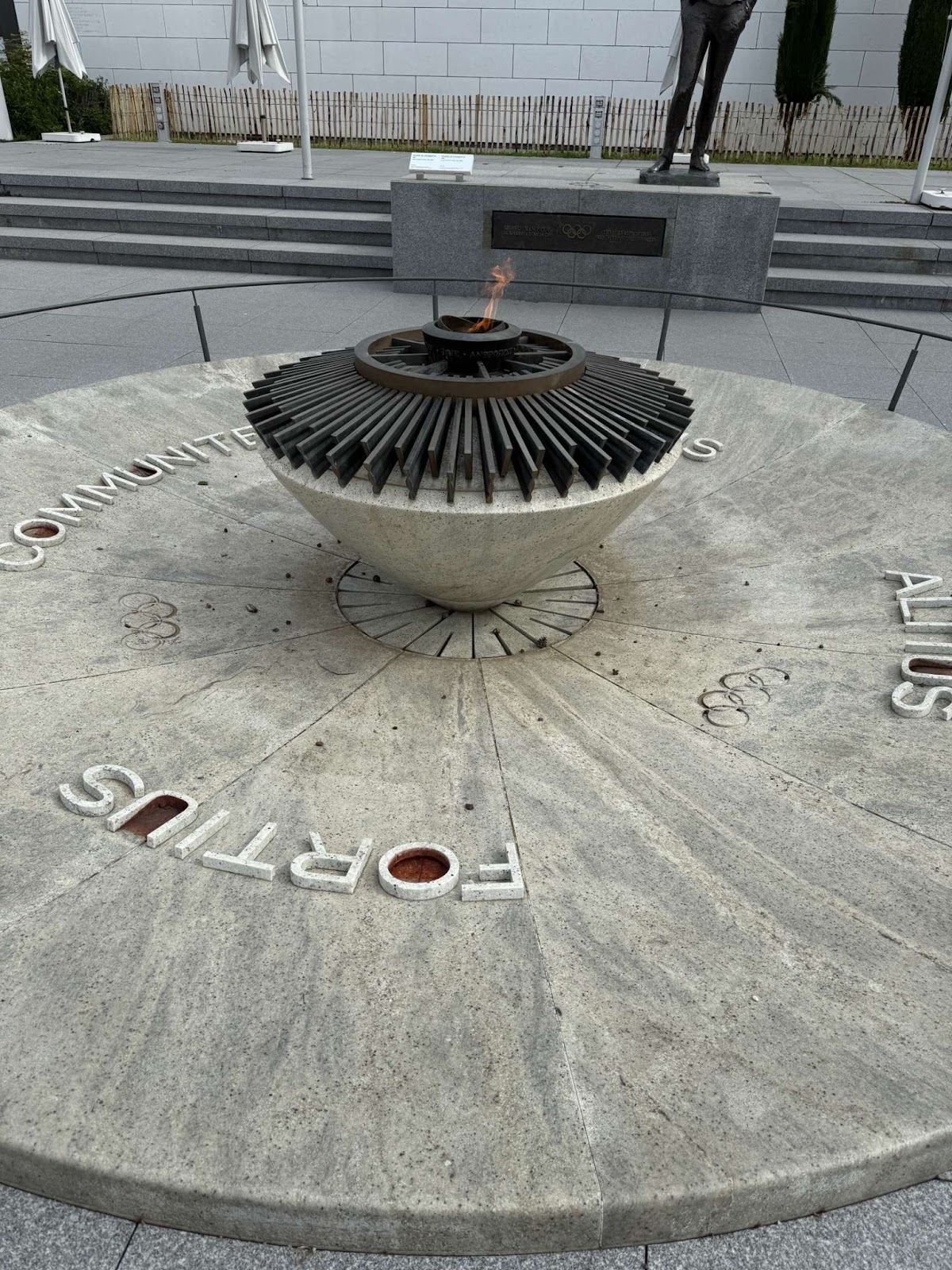
In 1888, Coubertin created a committee dedicated to reviving the Olympic Games. Coubertin was a firm believer in the idea that sport can be a driver for world peace; he organized these worldwide games to promote the positive impacts that sport can have, such as promoting peace, education, and physical fitness. Coubertin also created the motto of the Olympics, “Citius, Altius, Fortius,” which translates to “Faster, Higher, Stronger” in English. After showcasing where the Olympics started, the Museum then highlighted how far the Olympics have gone. The games did not begin as the global spectacle we see every two years. The museum displays the torch from every Olympics, allowing you to see the journey of each one. For example, you watch a video of the 2014 Sochi torch traveling all over the country as it took an unprecedented journey into outer space. The goal of the torch is to spread the Olympic movement and showcase the unique message the upcoming Olympic games will promote. I loved our experience at the Olympic Museum. I am a huge fan of sports history, and in my opinion, there is no better place to see the rich history of sport than at the Olympic Museum. You can see the significant impact of the games on the world, and so they have evolved into one of the largest events globally. There is so much that goes into the Olympics, and the rules are no exception.


After exploring the museum, we discussed Olympic Rule 40, Olympic Solidarity, and doping regulations, which have all generated controversy over the years. Rule 40 discusses player sponsorship regulations, stating that athletes are not allowed to showcase non-Olympic partner sponsorships during the games. In the United States, we are accustomed to seeing sponsorship thrust into our faces by players, but this rule prevents that; it prevents over-commercialization and showcases the games for what they truly are. These rules are tied to the Olympic Solidarity movement. Olympic Solidarity ensures that all 206 National Olympic Committees receive the necessary funds and programming. There have been disagreements in the past about whether these rules should remain in place, primarily due to larger NOCs, which have the most to gain from sponsorships. Smaller NOCs require these rules and programs to remain in place and operate effectively.


We then took a trip to Lake Geneva to have a picnic, with cooking supplies we bought at a nearby supermarket. The group enjoyed hot dogs prepared by Heavenly and sat by the lake, and relaxed. It was one of the best moments of the trip. 


Saturday, May 24, 2025

5/24 Swiss Alps Trek and Medieval Exploration

 Early Saturday morning, we boarded a train to Montreux for a day of hiking in the Swiss Alps—something I had been looking forward to since the beginning of the trip. Back home in Seattle, hiking is a huge part of my life. I spend most of my summers trying to cross off as many trails and summits as I can, so getting the chance to explore a new mountain range in another country felt like a dream come true.


After a scenic train ride through Switzerland’s wine country, with rows of vineyards stretching along the hillsides, we transferred to a smaller mountain train that began our gradual climb upward. We arrived at a charming farmer’s market tucked into the mountains. There were stalls full of fresh empanadas, local wine tastings, handcrafted jewelry, and artisanal goods. It was a lively and colorful place, and the perfect way to start the morning.


From there, we took a short but steep tram ride to the trailhead and began our ascent into the Alps. The hike reminded me a lot of home—tall pine trees lined the path, and we passed fields bursting with wildflowers. The air felt crisp and fresh, and the views grew more expansive with every step. After about 30 minutes, we reached the summit. The view was absolutely breathtaking: Lake Geneva shimmered below us, stretching farther than the eye could see, with the town of Montreux nestled along its edge. We could spot football fields, terracotta rooftops, brightly colored homes, and distant villages dotted along the mountain slopes. It felt surreal.


After soaking it in—and taking lots of photos—we began our descent. While technically going “down,” the trail zigzagged in steep switchbacks and rolling hills, alternating between climbs and drops. At one point, we passed a field of cows that, according to Bella, are considered the happiest cows in the world (and I believe it). About an hour later, we reached the bottom and returned to the lakeside, where we rewarded ourselves with fresh pizza, salad, and gelato.


Next, we headed to Château de Chillon—a site I knew little about before arriving but quickly became one of my favorite experiences of the trip. Perched on a rocky outcrop over Lake Geneva, the castle is one of Switzerland’s most visited historic landmarks. We explored its dungeons, banquet halls, bed chambers, and towering lookouts. The entire structure was both massive and majestic, with huge windows overlooking the lake and courtyards that seemed frozen in time. We wandered every corner, listening to guides explain what life would have been like there centuries ago. It was both haunting and awe-inspiring.


Back at the hotel that evening, I squeezed in my summer fitness packet before rejoining classmates for a light dinner. Though today was more about sightseeing than the Olympics, it sparked some interesting thoughts. One key element of both the Ancient and Modern Olympic movements is the idea of the Olympic Truce—using sport as a vehicle for peace, unity, and diplomacy. At Château de Chillon, we learned about the region’s history of conflict, invasions, and violent defense tactics. It made me wonder: could Olympic-style events have brought about a different kind of communication in medieval times? Could sport have been a unifier, even in this small mountain region?


We often think of the Olympics as a global event tied to major cities, but this experience reminded me how powerful sport can be, even in smaller communities. The way the modern Games promote tourism, culture, and peace makes me wonder what their influence might have looked like back then. One thing I do know: if Switzerland ever wanted to add hiking to the Olympic events, the Swiss Alps would be the ultimate venue—because that was no easy feat!

Friday, May 23, 2025

5/24 - Les Avants Day trip

    To start the day the group and I got on a train and headed to Les Avants to take part in a hiking excursion on the Narcissist trail. The main attraction on the trail is the infamous narcissist flower which is a white flower that resembles a daffodil. During our time on the trail, we had a great time taking in the views and experiencing what it was like to hike in an area adjacent to the Swiss Alps. But before we went on our hike we spent time in a farmers market where we could experience some authentic Swiss culture. Vendors at the market sold objects like wooden planks that had engraved logos or sports teams on them. Other vendors were either selling food or little souvenirs that we could buy and take home with us. After we went on the trail, which lasted about 2 hours, we took the train to Montreux where we indulged in a waterside lunch where all of us got different types of Italian food. Most of us got either pasta or pizza. 

    After that, everyone in the group got ice cream except for me and because I didn't get it we got a refund for paying for 9 ice creams and we only got 8. I got to keep the change. After our waterside lunch, we took a self-guided tour of the famous Castle Chillon which is the most visited historical site in Switzerland. During our self-guided tour, we took a suggested path around the entire castle. We had the most fun in the catacombs of the castle where we took part in learning about the history of what makes the castle special. Inside the castle, they had people selling different foods that would have been popular during the time the castle was in use. None of us got anything but the crepes looked decent. We spent around an hour and a half at the castle for our tour which was a reasonable amount of time as we had been up since 8 am to make sure that we got to the hiking trail with good weather. In my opinion, I enjoyed the Tower of London tour more than the Castle Chillon tour mostly because we had a funny tour guide who had a lot of knowledge of the historical events that took place at the castle. Compare that to Castle Chillon where we read of posted placards which is less than ideal when trying to have an enjoyable time at a historical site. After that, the group and I went on our separate ways for dinner before meeting up later that night. 


May 23rd: FISU, World Taekwondo, and KSOC

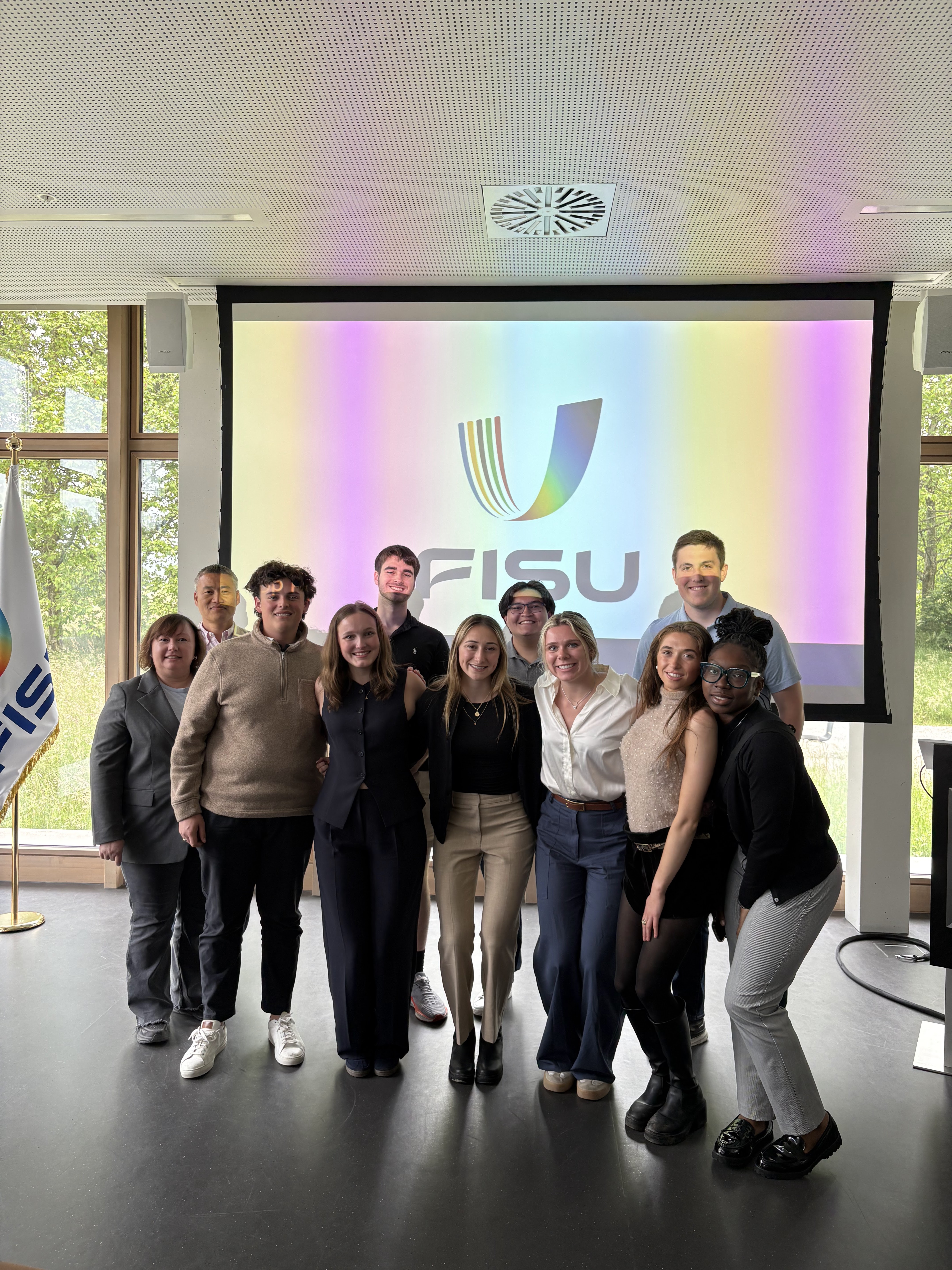
We had an early morning wake-up to get dressed and ready for business casual day, as we had a full schedule of meetings with multiple international sports organizations. After getting prepared, we hopped on the subway and made our way to the Université de Lausanne, where we met with the International University Sports Federation (FISU). FISU is essentially the international counterpart to the NCAA in the U.S., overseeing university-level sports on a global scale. One of the most fascinating things we learned about FISU is that they organize Olympic-style games for university students every two years—both summer and winter editions. The most recent FISU Winter Games were held in Lake Placid in 2023, and we found out that the 2027 Summer Games will be hosted across various colleges in North Carolina, which was especially exciting to hear for us. While we were at FISU, we also had the chance to explore a small museum-style exhibit they had on-site. It featured a range of artifacts from past FISU games. Browsing through the exhibits was a fun and engaging way to learn more about the history of international university sports. One of the highlights was seeing some of the original torches used in previous games, which gave us a real sense of tradition and prestige behind these events. Talking with representatives from FISU was eye-opening, especially since many of us had never heard of the organization before this trip. Hearing firsthand about their mission, programs, and upcoming events made us appreciate the global scope of college athletics.


After our meeting, we had lunch at the university’s cafeteria—and to everyone’s surprise, it turned out to be some of the best dining hall food any of us had ever had. The variety was incredible, and we got to try several different cuisines, which made it feel more like a food hall than a typical cafeteria. With full stomachs, we took a relaxing stroll along Lake Geneva, enjoying the stunning views and fresh air before heading to our next stop: the International Olympic Committee (IOC) headquarters. Of course, we had to stop for a quick group photo in front of the iconic Olympic rings!


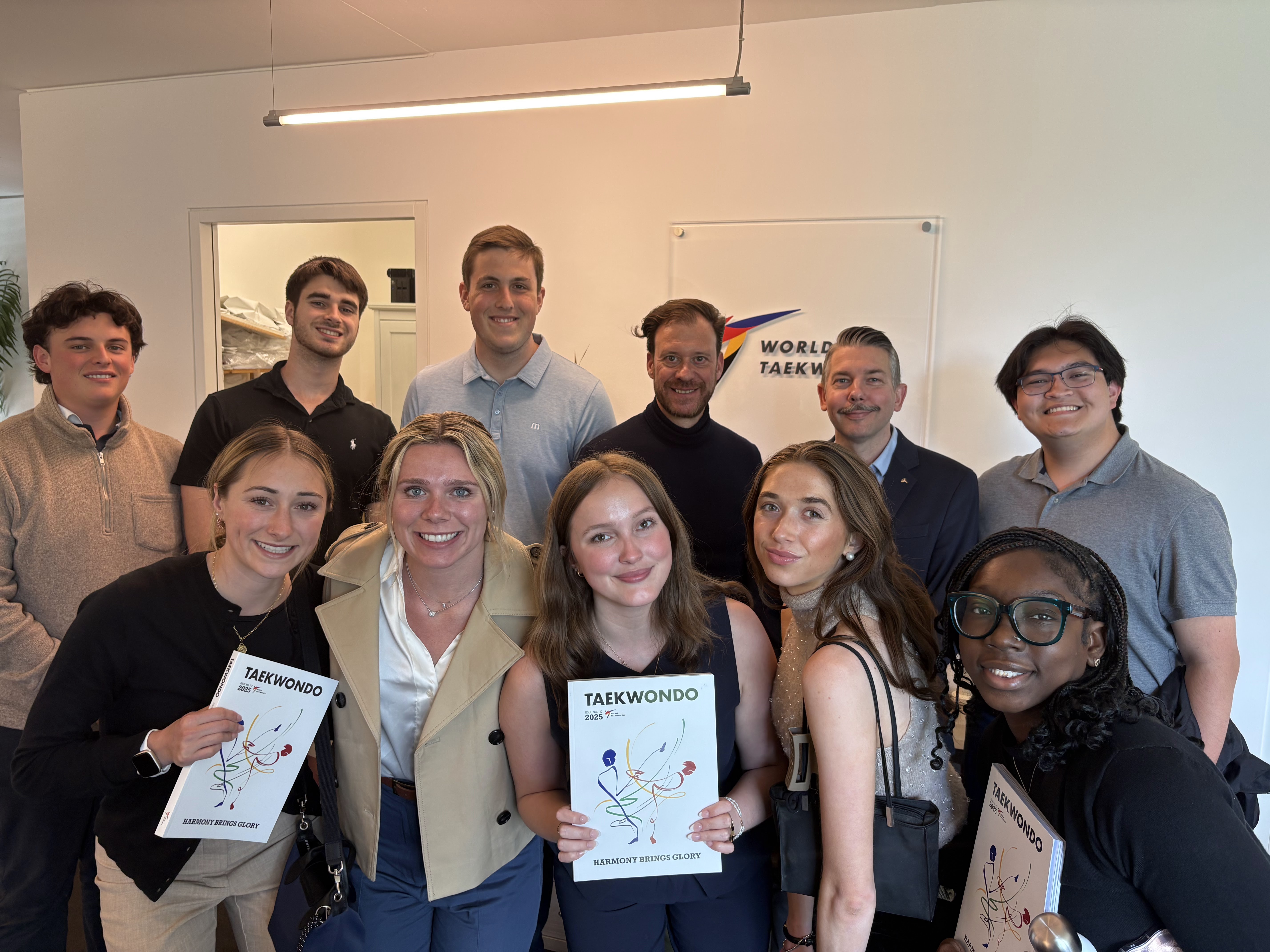
Next, we visited the Maison du Sport International, a hub that houses numerous international sports federations. Our first meeting there was with World Taekwondo. They welcomed us warmly into their office and led a fascinating discussion on both the history of Taekwondo and their humanitarian initiatives, including programs in Middle Eastern refugee camps. They even treated us to a generous selection of Swiss chocolates and snacks, and handed out magazines and other take-home materials, which was a fun bonus.


Our final visit of the day was with the Korean Sport and Olympic Committee (KSOC), which maintains a satellite office in Switzerland to stay closely connected with the IOC. During our meeting, we had a thoughtful conversation with one of Dr. Kim’s former colleague and another member, covering a wide range of topics including the financial structure of their organization, cultural considerationsevent management strategies, and efforts toward gender parity in sports.

After an inspiring day of meetings, we headed back to the hotel, did some laundry at a local laundromat, and then regrouped for dinner. We ended the night with a delicious meal at a Thai restaurant in town. For some people in the group, it was their first time trying Thai food, and the Pad Thai was an instant favorite. We took a leisurely walk back to the hotel, laughing and chatting the whole way, enjoying the atmosphere and checking out local neighborhood spots along the way. It was the perfect way to close out an incredibly enriching and enjoyable day.

5/23: FISU, IOC, World Taekwondo, and KSOC

Today marked our first full day in Lausanne. We started the day with a little bit of breakfast from the hotels restaurant before heading over to our first site. Our first stop was the FISU, or the international federation of sport university. We got here by taking the metro, and then walked through the universities campus. It was interesting to see this campus built in what looked like the middle of the woods. When we got there, we met up with a few FISU personnel and headed into our session. We got some history on what fisu was, and how they have helped develop many college athletes and prepare them for the olympic levels. FISU is a federation founded in 1948 that helps grow student athletes from the ages of 17-25 years old.  FISU holds summer and winter games every two years for their athletes, and it consists of the same aspects that would be seen during an olympic game. It was very interesting hearing about how facts about hosting games and how FISU governs their organization. 

    After we met with the organization, a member of the fisu led us to lunch in the universities cafeteria. It was amazing food. After lunch, we took a quick walk towards lake Geneva, which was a beautiful site. We walked through the park and got to admire the beautiful scenery as we headed up the road to the buildings. 

    On the way, we walked passed the IOC, which is the main organization for the Olympic games. Then we got to the building where we meet with people from the World Taekwondo. We met with two members and we had a conversation about the history of the organization, the sport today, and a bit about the impact taekwondo has on refugees. It was mentioned the importance of the Olympics for taekwondo, since it is not a big enough sport to get many viewers daily. We also talked about mechanics in the sports, and also watched videos and discussed the impact the organization had on a refugee camp in Jordan. The videos showed the importance the sport and especially the olympics has on many different parts of the world, and how it can help bring communities together. 

    After this, we got some snacks and then headed over to the Korean Olympic Committee. This part of the trip was very interesting and we had a bunch dialogue between the two memberts of the commitee. It was interesting to listen and hear a bit about the culture and how the olympics is run for the Korean nation. We learned about what goes into the government side, planning, athlete care, and how the olympics relates to Korean government. 

After this, we took a bus back to the hotel where we relaxed until dinner. Some of us got some Thai food, which it was a first for me. It was a very delicious dinner and I enjoyed this day very much.